

I remember sitting at my kitchen table with my laptop open, wondering how people were making money online without inventing a brand-new talent. I could write, organize ideas, and explain things clearly, but I did not think those skills were enough. Then I started using AI as a helper, not a replacement, and everything changed. If you want a practical place to start, jump into 21 HIGH INCOME SKILLS TO LEARN IN THIS AI ERA.
That is when I realized something simple: you do not need to be a tech genius to build a side hustle with AI. You just need one useful skill, a clear problem to solve, and a simple system that helps you turn what you know into something people will pay for. Whether you are 21, 35, 48, or 60, this works if you are willing to learn and stay consistent. The internet has opened the door for ordinary people to create income in extraordinary ways, and AI has made that door even wider.
What used to take hours can now take minutes. What used to feel overwhelming can now feel manageable. Instead of staring at a blank page, you can ask AI to help you brainstorm, outline, organize, and polish your ideas. That means you can spend less time getting stuck and more time building something real.
Before we go deeper, you can also skip around this post: go to the step-by-step process or jump to the tools.
OTHER RELEVANT BLOG POST
Related Posts:



If you have ever said, “I wish I knew how to make money online,” this post is for you. You do not need a huge following, a fancy website, or advanced computer skills. You need clarity, consistency, and a willingness to begin with what is already in your hands.
Why an AI side hustle Works With Skills You Already Have
AI is best used as a helper. It can help you brainstorm, outline, write faster, design better, and organize your ideas. But your talent is still the heart of the business. If you know how to teach, write, sew, cook, coach, plan, pray, budget, decorate, or encourage people, AI can help you package that skill into something useful.
OTHER RELATED BLOG POST
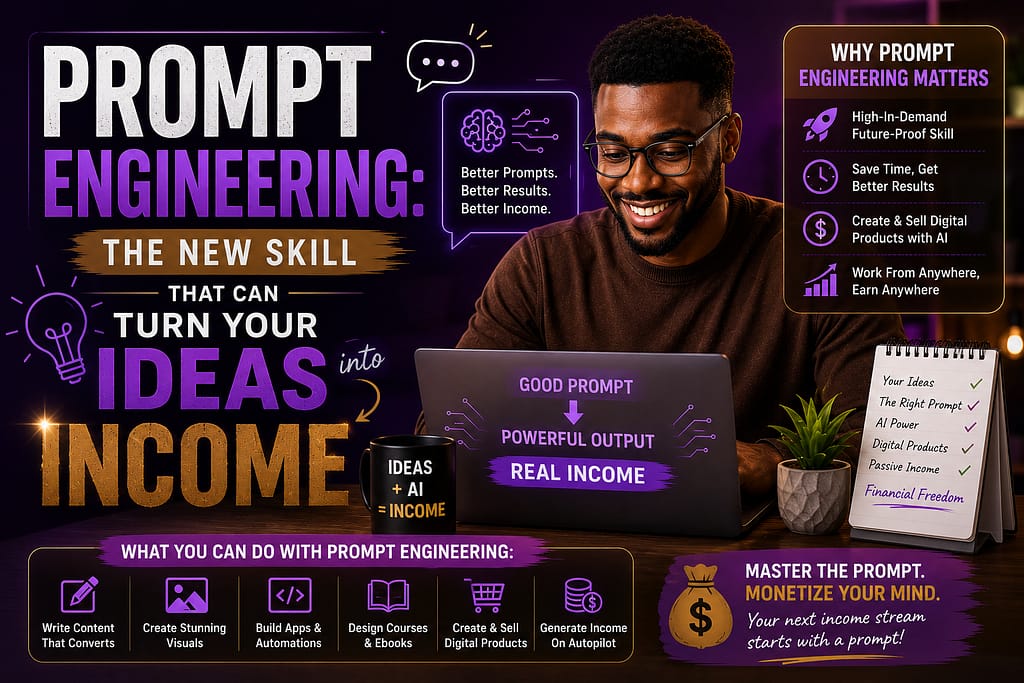

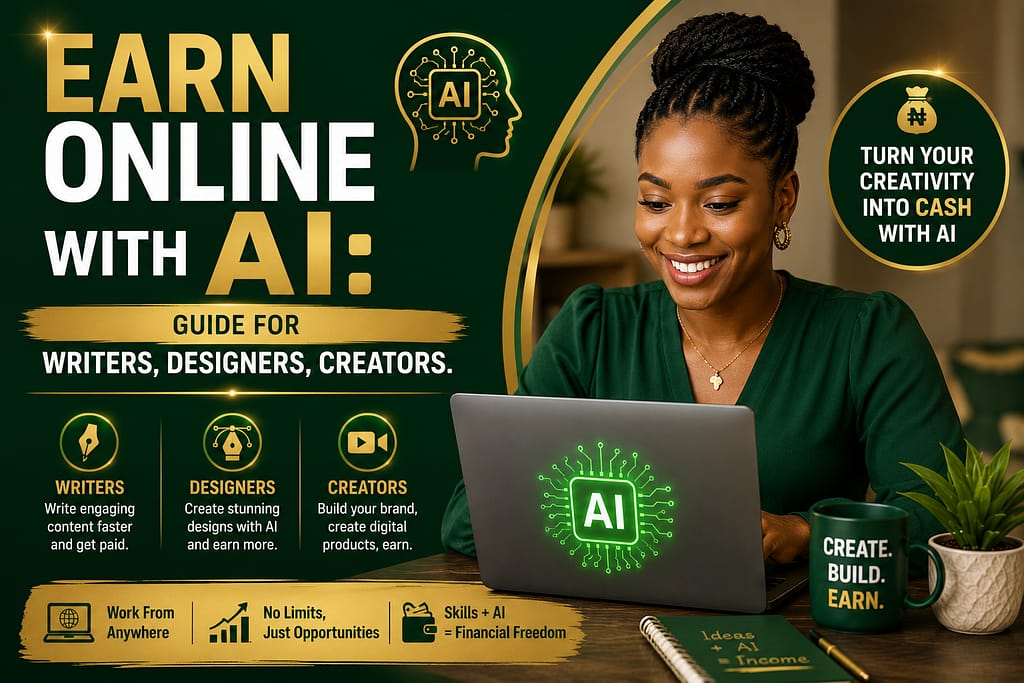
Think of it this way: your skill gives the value, and AI helps you deliver that value faster. That is why people from all different ages can do this. A 25-year-old with social media skills and a 58-year-old with years of experience in bookkeeping can both create digital products that help other people.
AI also helps remove one of the biggest barriers people face: perfectionism. Many people have good ideas but never launch because they are waiting until everything feels perfect. AI can help you create a first draft, and that first draft is often all you need to start testing an idea.
- Your experience becomes the message.
- AI helps you turn that message into words, graphics, and products.
- Your product can keep working even when you are not online.
- You can build something once and improve it over time.
- You can start small and grow with confidence instead of pressure.
This is especially powerful if you are balancing work, family, school, or ministry. You may not have ten extra hours a day, but you can still move forward in small, intentional steps. AI helps you save energy without sacrificing quality.
5 Steps to Build Your AI Side Hustle
- List your real skills. Do not overthink it. Write down what people already ask you for help with. Maybe you are good at resumes, recipes, budgeting, hair care, lesson plans, captions, Bible journaling, or editing. Think about what comes naturally to you, what others compliment you on, and what problems you can solve without much effort.
- Pick one problem. Choose a simple problem you can solve. For example, instead of saying you help everyone, say you help busy moms plan weekly meals or help job seekers write better resumes. The narrower your focus, the easier it is to create something useful and market it clearly.
- Use AI to shape the idea. Open ChatGPT and ask it to help you brainstorm product names, outline a guide, or turn your notes into a clear offer. You can also use Notion AI to organize your thoughts. Ask better questions and you will get better ideas. For example, you can say, “Help me turn my experience into a printable guide for beginners,” or “Give me 10 digital product ideas based on my skill in teaching.”
- Create a simple digital product. Start with something small, like a checklist, guide, template, workbook, prompt pack, or planner. Use Canva to make it look neat and professional. You do not need to build a full course on day one. A helpful, well-designed PDF can be enough to get your first sale.
- Put it in front of people. Share it on social media, email, your website, or a store like Gumroad or Payhip. You do not need a huge audience to start making sales. You need the right message going to the right people consistently.
For more support, try using AI to write your product description, create a sales page, or build a simple email message that invites people to buy. The goal is not perfection. The goal is progress. Even a basic product can help you learn what your audience wants, and that learning is valuable.
As you go through these steps, remember that clarity makes everything easier. A clear problem, a clear product, and a clear audience will save you time and frustration.
Digital Products You Can Create From One Skill
This is where things get exciting. Once you understand your skill, you can turn it into digital products people can buy again and again. You are not trading time for every dollar. You are creating something once and selling it many times.
One of the best things about digital products is that they can be simple. You do not need to build a giant library right away. Start with one useful item that solves one problem well. When people see results, they are more likely to trust you, buy again, and recommend your work to others.
- Templates: meal plans, planners, lesson plans, budget sheets, email scripts, or caption templates.
- Guides: how-to ebooks, step-by-step worksheets, and beginner checklists.
- Prompt packs: AI prompts for writing, business, content creation, or faith journaling.
- Mini-courses: short training videos that teach one clear result.
- Printables: prayer journals, trackers, calendars, affirmation sheets, and goal pages.
- Toolkits: bundles that combine templates, checklists, and instructions in one easy download.
- Swipe files: ready-made examples people can edit and use immediately.
Other digital products you can create
If your strength is helping people stay organized, AI can help you turn that into a planner. Again, if you are a teacher, AI can help you create worksheets faster. If you are creative, AI can help you draft product descriptions, titles, and promotional posts. That is the beauty of this season: your talent can become a digital product business.
Here are a few real-life examples:
- A fitness lover can create a 30-day meal and movement planner.
- A teacher can create classroom management printables or homework trackers.
- A parent who loves budgeting can create a family savings tracker.
- A writer can create prompt packs, content calendars, or blog post templates.
- Someone with ministry experience can create devotionals, prayer journals, or Bible study worksheets.
Notice that none of these require starting from scratch as a brand-new person. They simply package what already exists inside your experience.
Helpful AI Tools That Make AI side hustles easier.
You do not need a dozen tools to begin. Start small and stay focused. Here are a few that are easy to learn:
- ChatGPT: for brainstorming, outlining, writing, and repurposing content.
- Canva: for designing digital products, pins, lead magnets, and social posts.
- Notion AI: for planning your workflow and keeping ideas organized.
- Gumroad or Payhip: for hosting and selling your digital products.
Use AI to help with the work that drains your time. Let it draft, summarize, and clean up your ideas while you stay focused on the unique value only you can give.
You can also use AI to make your workflow smoother in everyday tasks. For example, it can help you outline a product launch, generate blog post ideas, draft a thank-you email, or repurpose one idea into many posts. That means you are not constantly reinventing the wheel.
More inside this post: the step-by-step process and the product ideas can help you move faster.
How to Choose the Right Idea Faster
If you are sitting there with too many ideas, keep it simple. Choose the idea that checks these boxes:
- It solves a problem people already have.
- You can explain it in one or two sentences.
- You know enough about the topic to create a useful first version.
- You can finish it in a few days, not a few months.
- You would feel comfortable sharing it with someone you want to help.
A lot of people get stuck because they think their first product has to do everything. It does not. It only needs to help one person in one clear way. If your first idea is small, that is good. Small is easier to launch, easier to improve, and easier to sell.
How AI-Powered Side Hustles Can Support Your Creative Process
AI can fit into almost every part of your creative process. It can help you:
- brainstorm product ideas
- outline a guide or workbook
- rewrite your notes into polished copy
- create titles and subtitles
- write email sequences
- generate social media captions
- summarize research
- suggest ways to improve clarity
For example, you might start with rough notes in a notebook. Then you paste them into AI and ask for a cleaner outline. After that, you move the outline into Canva and design a simple PDF. Finally, you write a short description and share it with your audience. That is a complete workflow from idea to income.
The more you practice, the easier it becomes to repeat the process. Repetition is powerful because it helps you build speed, confidence, and better results over time.
Simple Tips to Sell Without Feeling Pushy
- Speak to one person. Write as if you are talking to one real buyer with one real problem.
- Show the result. Do not just list features. Tell people how your product helps them save time, get organized, or feel confident.
- Share your process. People love behind-the-scenes stories. Show them how you made the product with AI and your own skill.
- Keep it simple. You do not need fancy language. Clear always wins.
- Be consistent. One product shared often can do more than ten products nobody sees.
- Use honest language. People trust creators who sound real, helpful, and grounded.
When you speak to real problems, people listen. And when you offer a simple solution, people buy. Your goal is not to pressure anyone. Your goal is to serve well and make it easy for the right people to say yes.
It also helps to remember that selling is part of helping. If your product truly saves someone time, gives them confidence, or helps them take action, then sharing it is a service.
Common Mistakes to Avoid with AI-Powered Side Hustles
- Trying to help everybody. A narrow audience is easier to reach.
- Waiting too long to launch. Early feedback is better than endless planning.
- Using too many tools. Keep your process simple until you have momentum.
- Ignoring clarity. If people do not understand the offer, they will not buy it.
- Expecting overnight results. Real income usually grows through steady effort.
The good news is that none of these mistakes mean failure. They are simply part of learning. Every creator improves by doing, not by endlessly thinking.
AI-Powered Side Hustle To Do This Week
Choose one skill, one product, and one place to share it. You do not need ten ideas. You need one clear start. Write your skill down today, ask AI for three product ideas, and create your first draft before the week ends.
If you want to make this even easier, follow this quick action plan:
- Pick a skill you already use in real life.
- Ask AI to suggest a helpful product idea based on that skill.
- Choose one format, like a checklist, guide, or planner.
- Create a simple first version in Canva or a document.
- Share it with at least one place online.
That may sound small, but small beginnings are how most real businesses start. The first step is often the hardest, and once you take it, the next step becomes clearer.
Why This Matters Long-Term
An AI-powered side hustle is more than a quick way to make extra cash. It can become a skill-building path that teaches you creativity, marketing, problem-solving, and confidence. Over time, one small product can grow into a library of offers, a brand, an audience, and even a full business.
You may begin with one printable or one guide, but that first project can open doors you did not expect. It can show you what people need, what you enjoy creating, and how to serve more effectively. Many people never start because they think they need the whole plan before taking action. In reality, the plan gets clearer as you move.
Conclusion: If you have been waiting for a sign, this is it. Your skill does not have to be flashy to be profitable. Use AI to help you shape it, package it, and sell it in a way that serves other people. Start small this week, and let your first product teach you what to do next.
The best part is that you do not have to do everything alone. Let AI support the process, let your experience guide the message, and let consistency carry you forward. You already have something valuable to offer. Now it is time to turn it into income.